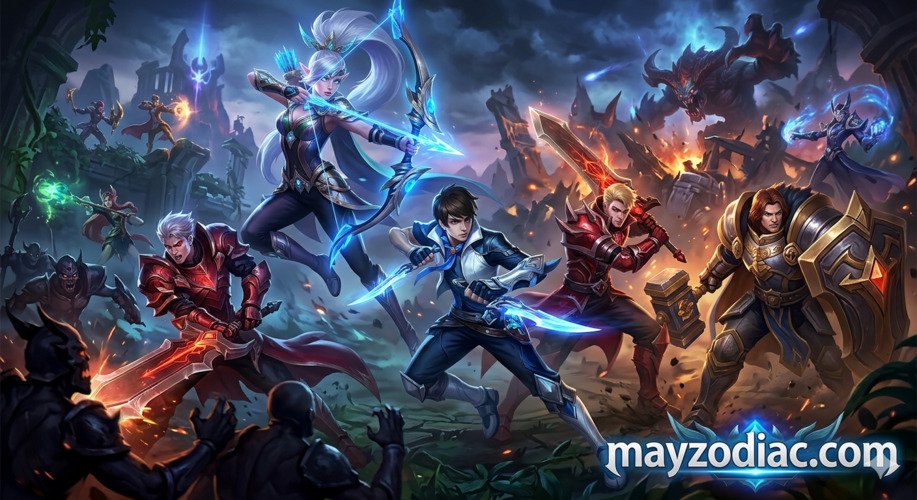
mayzodiac.com – Mobile Legends: Bang Bang offers a fast-paced battlefield where every hero plays a unique role in shaping the outcome of the match. Success is not just about mechanical skill, but also understanding how each hero functions within a team, how to adapt to different situations, and how to make decisions that influence the flow of the game. Whether you prefer charging into the frontline, eliminating enemies in seconds, or controlling fights from a distance, every hero has a purpose that contributes to victory. This guide explores the depth of hero roles, strategic gameplay, and advanced mastery to help you understand the game at a more competitive level.
Understanding Hero Roles and Battlefield Dynamics
Every match in Mobile Legends revolves around five core roles, and each hero fits into a specific category that defines their strengths and weaknesses. Understanding these roles is essential before learning advanced strategies because it shapes how you position yourself, when you engage, and how you support your team throughout the match.
Tanks are the backbone of any team composition, designed to absorb damage and initiate fights. These heroes are typically equipped with high durability, crowd control abilities, and tools that disrupt enemy formations. Their presence in the frontline allows damage dealers to operate safely behind them. A good tank does not simply absorb damage; they dictate the tempo of engagements by deciding when to initiate or retreat.
In practical gameplay, tanks must constantly monitor enemy positioning and protect vulnerable allies such as marksmen and mages. They often act as vision providers, checking bushes and leading rotations. Without a strong tank, teams often struggle to start fights or defend objectives effectively, making this role one of the most influential in coordinated play.
Assassins and Burst Damage
Assassins are designed to eliminate high-priority targets quickly and efficiently. They thrive on mobility, burst damage, and precision targeting. Unlike tanks, assassins avoid direct confrontation and instead look for opportunities to flank or ambush enemies who are out of position. Their success depends heavily on timing and map awareness.
In team fights, assassins often wait for key enemy skills to be used before diving into the backline. A well-executed assassination can completely shift the momentum of a fight, especially if the enemy’s core damage dealer is eliminated early. However, assassins are also highly vulnerable when caught, requiring careful positioning and decision-making to avoid being punished.
Mages and Magical Pressure
Mages provide consistent magical damage and area control, making them essential for both poke damage and burst combinations. Their abilities often include crowd control, zoning tools, and long-range attacks that allow them to influence fights without direct exposure. Mages are especially powerful in mid-lane, where they can rotate quickly to support other lanes.
In team fights, mages play a crucial role in softening enemies before full engagement. Their skill timing can determine whether a fight is won or lost, especially when combined with tank initiation or assassin dives. A skilled mage player knows how to position safely while maximizing damage output across multiple targets.
Core Gameplay Strategies for Each Role
Understanding hero roles is only the beginning. True mastery comes from applying strategies that align with the different stages of the game. Early, mid, and late game each require distinct approaches, and adapting your gameplay accordingly is what separates average players from advanced ones.
The early game is all about establishing control over lanes and gathering information. During this phase, players focus on farming efficiently while avoiding unnecessary risks. Each hero has a specific laning behavior; for example, marksmen prioritize last-hitting minions safely, while tanks may roam early to assist other lanes.
Map awareness becomes critical during this stage. Watching enemy movements and predicting ganks can prevent early disadvantages that often snowball into larger problems. Good players constantly check the minimap and communicate enemy positions to their team. Small advantages gained in the early game often set the foundation for mid-game dominance.
Mid Game Rotation and Objective Control
As the game transitions into the mid phase, heroes begin to rotate more frequently between lanes. This is where team coordination becomes extremely important. Objectives such as turrets, Turtle, and map control start to determine the flow of the match. Teams that rotate efficiently often gain gold and experience advantages that are difficult to recover from.
During this stage, heroes must balance aggression with caution. Tanks initiate skirmishes, assassins look for picks, and mages provide zoning and burst damage. Marksmen begin to scale into their core damage potential, making them more relevant in fights. Proper vision control and coordinated rotations are essential to maintaining pressure across the map.
Late Game Team Fight Execution
The late game is where every decision carries significant weight. One mistake can lead to losing the entire match, especially because respawn times are much longer. Team fights become more structured, with both teams waiting for the perfect opportunity to engage.
In this stage, positioning becomes the most important factor. Marksmen must stay protected while dealing consistent damage, mages must maximize their area damage without getting caught, and assassins must wait for the right moment to eliminate key targets. Tanks play a decisive role in initiating fights and protecting their backline. Proper execution of team fights often determines the final outcome of the game.
Once players understand roles and strategies, the next level of improvement comes from mastering adaptability. Mobile Legends is not a static game; every match requires adjustments based on enemy composition, team synergy, and in-game developments. Advanced players are those who can modify their approach dynamically.
Itemization and Build Flexibility
Itemization is one of the most underrated aspects of gameplay. Choosing the right items based on the enemy team can drastically improve performance. For example, defensive items can help damage dealers survive burst attacks, while penetration items can counter tank-heavy compositions.
Flexibility in builds is essential because no two matches are the same. A rigid build path often leads to inefficiency, while adaptive itemization allows players to respond to threats in real time. Understanding when to prioritize damage, survivability, or utility is a key skill in high-level play.
Counter-Picking and Draft Strategy
Before the match even begins, hero selection plays a crucial role in determining success. Counter-picking involves choosing heroes that have natural advantages against enemy selections. This requires knowledge of hero matchups, strengths, and weaknesses.
Draft strategy also includes building a balanced team composition. A team with too many damage dealers but no frontline will struggle, while a team lacking burst damage may fail to secure kills. Understanding synergy between heroes is essential for creating a well-rounded lineup that can handle different phases of the game.
Mechanical Skill and Decision Making
Mechanical skill refers to a player’s ability to execute abilities accurately, time combos, and react quickly under pressure. While mechanics are important, decision-making often has an even greater impact on winning games. Knowing when to engage, retreat, or split push can determine the flow of the match.
Advanced players combine mechanics with game sense. They anticipate enemy movements, predict skill usage, and position themselves optimally during fights. This combination of awareness and execution is what defines high-level gameplay in Mobile Legends.
Conclusion Mastering Heroes in Mobile Legends: A Complete Guide to Roles, Strategy, and Advanced Gameplay
Mastering heroes in Mobile Legends requires more than just learning abilities or practicing mechanics. It involves understanding roles, adapting strategies across different stages of the game, and continuously refining decision-making skills. Each hero contributes uniquely to the battlefield, and success depends on how well players can integrate their strengths into a cohesive team strategy.
From the resilience of tanks to the precision of assassins and the control of mages, every role has a purpose that shapes the outcome of the match. As players progress, the game evolves into a deeper experience of strategy, timing, and adaptation. Those who learn to balance these elements will consistently perform better and gain a stronger understanding of what it truly means to master Mobile Legends heroes.