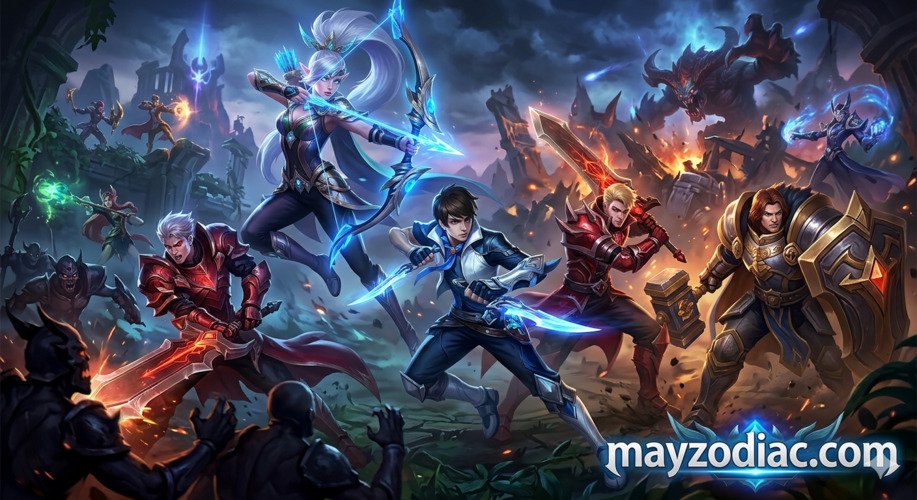
mayzodiac.com – Mobile Legends: Bang Bang is a strategy game where every stage of the match gradually builds toward a series of decisive team fights. While farming efficiently, managing lanes, and securing objectives all contribute to a team’s progress, many matches are ultimately decided by how well five players coordinate during large-scale engagements. Winning an important fight often creates opportunities to destroy towers, secure Lord, or finish the game entirely. However, victory in a team fight rarely depends on individual mechanics alone. Proper positioning, communication, timing, and understanding each hero’s role are equally important in determining which team emerges victorious.
Many players approach team fights with only one goal: attacking the nearest enemy as quickly as possible. Although aggression can sometimes produce positive results, uncoordinated attacks frequently expose damage dealers, waste important abilities, and create openings for opponents to exploit. Experienced players understand that every engagement follows a structure. Before abilities are used, players evaluate positioning, identify priority targets, and wait for favorable conditions. During combat, each role performs specific responsibilities that support the overall strategy rather than pursuing personal eliminations. After the fight concludes, successful teams immediately convert their advantage into objectives instead of celebrating unnecessary kills.
Understanding team fights also strengthens decision-making throughout the entire match. Players begin recognizing which engagements should be avoided, when to retreat instead of forcing combat, and how objective timing influences the value of every battle. This broader perspective reduces unnecessary risks while encouraging more disciplined gameplay that consistently benefits the entire team.
Mastering team fights requires patience because success depends on cooperation rather than individual highlights. Every role contributes differently, every engagement develops uniquely, and every decision influences the outcome of the match. By improving coordination and learning how to approach battles strategically, players increase both their consistency and their overall impact in Mobile Legends.
Preparing for Successful Team Fights
Strong team fights begin long before the first ability is activated. Positioning determines how easily each hero can contribute while minimizing unnecessary exposure to enemy attacks. Teams that establish favorable formations before combat usually maintain greater control once the engagement begins.
Frontline heroes should occupy areas where they can absorb pressure and discourage enemy initiation without moving too far ahead of allied support. Their presence creates safe space for teammates while limiting opportunities for opponents to reach vulnerable damage dealers. Behind the frontline, Marksmen and Mages should maintain safe distances that allow continuous damage output without exposing themselves to unnecessary danger. Fighters often remain flexible, ready to reinforce the frontline or pressure enemy backline depending on how the battle develops.
Positioning also depends heavily on terrain. Narrow pathways, bushes, and objective areas all influence movement and visibility. Experienced players use these environmental features carefully, avoiding predictable locations while remaining close enough to support teammates immediately when combat begins.
Maintaining proper formation requires constant adjustment because enemy movements continuously change the battlefield. Instead of remaining stationary, successful teams reposition gradually while preserving overall structure, ensuring that every hero remains capable of contributing effectively throughout the engagement.
Identifying Priority Targets
One of the most common mistakes during team fights is attacking whichever opponent happens to appear first. While this approach may occasionally succeed, coordinated teams achieve better results by identifying targets according to strategic importance rather than proximity alone.
Priority targets often include heroes who contribute the greatest damage, provide essential crowd control, or create significant support for the opposing team. Eliminating or neutralizing these heroes early reduces the enemy’s overall effectiveness while creating safer conditions for teammates to advance.
However, focusing priority targets does not always mean diving recklessly into the enemy formation. Sometimes protecting allied damage dealers while allowing opponents to overextend provides a more reliable path toward victory. Experienced players constantly evaluate whether aggressive pursuit or disciplined defense offers greater value based on the current situation.
Target selection also evolves during the fight. As heroes use important abilities or reposition across the battlefield, priorities may shift rapidly. Strong teams adapt continuously rather than following rigid plans established before combat begins.
Preserving Important Abilities
Every ultimate ability and crowd control skill carries significant influence during major engagements. Using these abilities carelessly before a full team fight often weakens the team’s overall potential once decisive combat begins.
Experienced players manage cooldowns carefully, recognizing that patience frequently creates stronger opportunities than immediate aggression. Waiting for opponents to group together, commit important abilities, or expose vulnerable positions often increases the effectiveness of powerful skills dramatically.
Communication further improves ability management. Teammates who understand which major abilities remain available coordinate more effectively, reducing confusion while maximizing overall impact during the engagement.
Executing Strong Team Fights
Every role contributes differently once combat begins, and understanding these responsibilities creates smoother teamwork throughout the engagement. Tanks initiate favorable fights or protect vulnerable allies depending on the situation. Fighters pressure important enemy positions while adapting between offense and defense. Mages provide burst damage and crowd control that disrupt enemy formations. Marksmen maintain consistent damage from safe positions, and Junglers identify opportunities to eliminate exposed targets or secure objectives after the battle concludes.
Coordination between these roles creates greater effectiveness than isolated individual actions. A Tank who creates space without nearby support gains little value, just as a Marksman positioned too aggressively becomes an easy target despite dealing significant damage. Successful teams therefore move together while respecting each hero’s strengths and limitations.
Adaptability also remains important. Not every engagement develops according to expectation, and players must respond intelligently as circumstances change. Recognizing when to advance, retreat, or regroup often determines whether a difficult fight remains recoverable.
Maintaining Discipline Under Pressure
Large team fights often become chaotic because multiple abilities, movement patterns, and objectives compete for attention simultaneously. Players who remain calm generally make better decisions than those who react impulsively.
Discipline includes maintaining positioning, resisting unnecessary pursuits, and preserving focus on overall objectives instead of individual eliminations. Even after gaining an early advantage, overextending into dangerous territory frequently allows opponents to recover unexpectedly.
Experienced players continuously reassess the situation during combat. If conditions become unfavorable, retreating safely often provides greater long-term value than continuing a losing engagement. Preserving key heroes for future objectives frequently outweighs temporary attempts to secure additional eliminations.
Converting Victories Into Objectives
Winning a team fight should always create meaningful progress beyond the engagement itself. Once opponents have been defeated or forced to retreat, experienced teams immediately evaluate nearby opportunities.
Destroying towers, securing Lord, collecting jungle resources, or pushing minion waves usually provides more lasting benefits than chasing isolated survivors across the map. These objectives strengthen the team’s position while reducing opportunities for opponents to recover.
Objective-focused thinking transforms successful team fights into permanent strategic advantages that continue influencing the match long after combat has ended.
Improving Coordination Every Match
Team fight performance improves through repetition and reflection. Players should evaluate positioning, target selection, communication, and ability usage after every match to identify consistent strengths and weaknesses.
These observations gradually improve decision-making while strengthening cooperation with teammates across different situations.
Prioritizing Team Success Over Individual Statistics
Strong team fighters understand that victory depends on collective performance rather than personal achievements. Protecting teammates, creating space, or securing objectives often contributes more to winning than accumulating the highest elimination count.
Maintaining this team-oriented mindset encourages smarter decisions throughout every stage of the match.
Conclusion Mobile Legends Team Fight Guide: How to Coordinate Engagements and Win Decisive Battles
Team fights are among the most important moments in Mobile Legends because they often determine control of major objectives and the overall direction of the game. By preparing carefully before engagements, maintaining disciplined positioning, identifying priority targets, coordinating every role effectively, and converting victories into lasting objectives, players significantly increase their influence on the battlefield.
Unlike isolated mechanical plays, successful team fights reward patience, communication, and strategic awareness. Every decision made before, during, and after combat contributes to the team’s overall success, making coordination far more valuable than individual aggression alone.
As players continue refining their understanding of team fights, they develop stronger teamwork, more consistent decision-making, and greater confidence during high-pressure situations. In Mobile Legends, the teams that fight together with clear purpose and disciplined execution are the ones that consistently secure objectives, control the pace of the match, and achieve lasting success in ranked play.