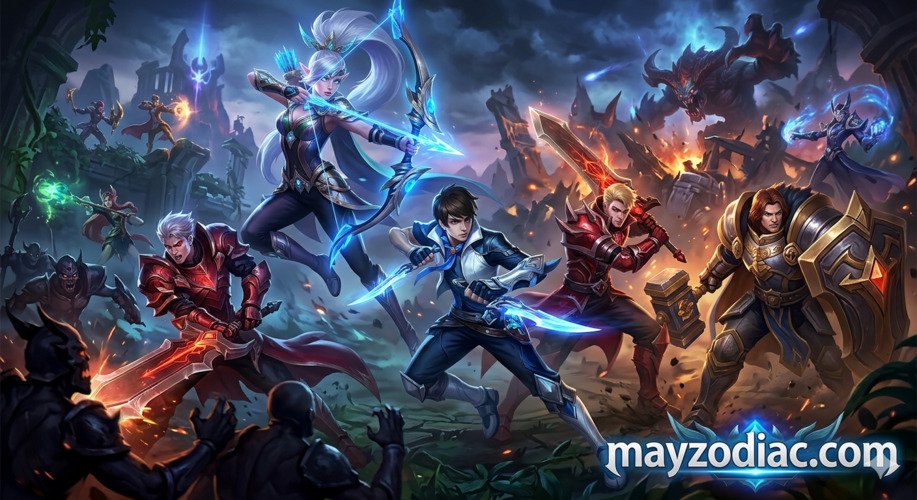
mayzodiac.com – Mobile Legends: Bang Bang remains one of the most competitive and entertaining mobile games because it successfully blends action, strategy, and teamwork into a fast-paced experience. Players are constantly challenged to adapt to different opponents, hero combinations, and match situations. While many people initially enjoy the game because of exciting battles and flashy skills, long-term improvement comes from understanding how the entire match functions beyond individual combat.
One of the biggest reasons players struggle in ranked mode is because they focus too heavily on mechanics alone. Landing abilities accurately and reacting quickly are important skills, but they are only part of what creates consistent victories. Mobile Legends rewards players who understand objectives, map awareness, rotations, and efficient teamwork. A player can dominate the scoreboard yet still lose because the team failed to manage pressure across the map or secure critical objectives at the right moment.
The game also stays fresh because no two matches develop in exactly the same way. Some games revolve around aggressive early-game pressure, while others become slow and tactical as both teams wait for the perfect opportunity to engage. Hero drafts, lane matchups, and item decisions constantly influence the pace of the game, forcing players to adjust their strategies continuously.
Understanding the Core Mechanics of Mobile Legends
One of the most important lessons in Mobile Legends is understanding that kills are not the true objective. Eliminations may create momentum and temporary pressure, but victory ultimately comes from destroying the enemy base.
Every successful fight should lead to something meaningful. If enemies are eliminated near Turtle, the team should immediately focus on securing the objective. Winning a large engagement can create opportunities to destroy turrets or pressure Lord. Players who spend too much time chasing surviving enemies often waste valuable chances to gain permanent advantages.
Experienced players understand that objectives shape the battlefield permanently. Turrets reduce enemy control over important areas and create safer movement paths for allies. Turtle provides additional gold and experience that accelerate item progression. Lord becomes especially powerful during the late game because it forces defensive pressure and creates opportunities to end the match.
Hero Roles and Team Responsibilities
Every role in Mobile Legends contributes differently to the team, and understanding those responsibilities is essential for effective coordination.
Tanks are responsible for absorbing damage and initiating fights. Fighters combine offensive pressure with durability and often control side lanes. Assassins focus on mobility and quickly eliminating fragile enemies. Mages provide magical burst damage and crowd control abilities. Marksmen become powerful during the late game because of sustained ranged attacks. Supports strengthen allies through healing, protection, and utility effects.
A balanced team composition creates consistency throughout the game. Too many fragile heroes can leave the lineup vulnerable during team fights, while too little damage may make objectives difficult to secure. Strong players understand that teamwork begins during hero selection rather than after the match starts.
Farming and Economic Control
Farming is one of the most important systems in Mobile Legends because it determines how quickly heroes become effective. Gold and experience allow players to purchase stronger items and increase overall combat power.
Efficient farming involves clearing minion waves consistently, managing jungle camps, and minimizing wasted movement around the map. Strong players rarely stand idle because every second can contribute toward building an advantage.
Many players make the mistake of abandoning farm too frequently for unnecessary fights. Although helping teammates can sometimes matter, sacrificing too much gold and experience weakens a hero significantly. Skilled players understand how to balance aggression with resource efficiency.
Strategic Habits That Improve Gameplay
After the laning phase ends, rotations become one of the most important aspects of the game. Rotating means moving between lanes or objectives to support allies and apply pressure.
Mid laners often rotate first because they can quickly reach both side lanes. Roamers and junglers heavily influence the tempo of the game through movement and vision control. A successful rotation creates temporary numerical advantages that often lead directly to objectives.
Timing is critical. Rotating too early may waste valuable farm and experience, while rotating too late may miss opportunities entirely. Skilled players move only when there is a clear purpose behind the rotation.
Minimap Awareness and Information Gathering
The minimap is one of the most valuable tools in Mobile Legends because it constantly provides information about enemy positions, ally movement, and objective status.
If several enemies disappear from vision, they may be preparing an ambush or contesting an objective. If the enemy jungler appears on one side of the map, another lane may become safer to pressure aggressively. Recognizing these patterns allows players to make proactive decisions instead of reacting too late.
Experienced players constantly check the minimap throughout the match. This simple habit greatly improves awareness and helps prevent avoidable mistakes.
Positioning During Team Engagements
Late-game team fights often decide the outcome of a match, making positioning one of the most important skills in Mobile Legends.
Marksmen and mages should remain behind the front line while dealing damage safely. Tanks and fighters must absorb enemy pressure and create space for teammates. Assassins should wait patiently for the right opportunity to eliminate vulnerable targets.
Target priority also matters significantly. Eliminating the enemy marksman or mage usually creates much greater impact than attacking the tank. Players who understand positioning and target selection consistently contribute more during critical engagements.
Expanding Hero Knowledge
Many players become overly dependent on one hero, but learning multiple heroes creates broader understanding and flexibility.
Understanding how different heroes function helps players predict enemy actions more effectively. If you know how an assassin combo works, you can position more safely against it. If you understand a mage’s crowd control range, you can avoid dangerous situations more consistently.
A larger hero pool also improves adaptability during ranked drafting, allowing players to fill missing roles and strengthen overall team composition.
Adapting Item Builds
Using the same build every match limits strategic flexibility. Strong players adjust their item choices depending on enemy composition and gameplay conditions.
Against healing-heavy lineups, anti-heal items become essential. Against physical burst damage, armor significantly improves survivability. Against magic-heavy teams, defensive magic resistance can completely change the outcome of fights.
Adapting item builds allows players to directly counter enemy strengths rather than relying only on standard recommendations.
Maintaining Mental Discipline
Mindset has a major influence on gameplay performance. Losing streaks, mistakes, and toxic teammates can affect concentration and lead to poor decisions.
Players who remain calm usually perform more consistently. Even when behind, many matches remain winnable through disciplined defense and one successful team fight. Emotional reactions often remove those comeback opportunities.
A healthy mindset also means focusing on personal improvement rather than constantly blaming teammates. Strong players review their own mistakes and continue learning from every match.
Conclusion Mobile Legends Advanced Guide: Building Better Decision-Making and Stronger Team Play
Mobile Legends is far more than a simple mobile action game. It combines fast-paced combat with strategic depth that rewards players who understand objectives, teamwork, and adaptation. Players who focus only on individual combat often struggle to improve consistently, while those who understand the larger systems become significantly stronger over time.
Success comes from mastering multiple connected skills. Farming, rotations, minimap awareness, positioning, hero knowledge, and mental discipline all contribute to stronger gameplay. No single factor guarantees victory, but together they create a reliable foundation for long-term improvement.
The best way to improve in Mobile Legends is to treat every match as a learning opportunity. Focus on objectives, support your team, and adapt to changing situations. Over time, these habits will lead not only to better ranks but also to a deeper appreciation of the strategic gameplay that makes Mobile Legends such a rewarding competitive experience.