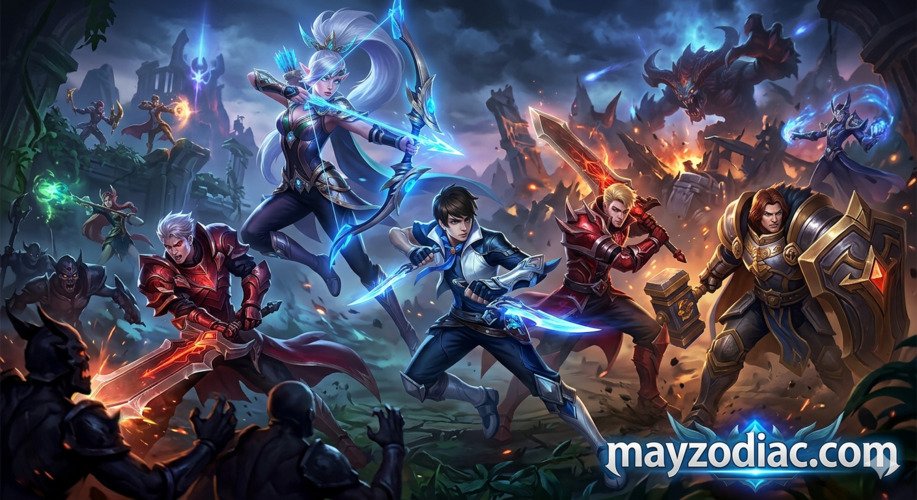
Understanding How Multiple Threats Shape the Battlefield
mayzodiac.com – In Mobile Legends: Bang Bang, danger does not always come from an opponent who is directly attacking a hero. Some threats develop gradually through lane pressure, hidden enemy movement, weakened defensive structures, and the positioning of opponents around important areas. Players who focus exclusively on visible combat may overlook these developing situations until they become difficult to manage. Understanding tactical threat layering helps players recognize how several smaller dangers can combine into a much larger problem.
An enemy marksman pushing a side lane, for example, may not appear especially dangerous when considered independently. However, the situation becomes more serious when the opposing jungler disappears from the minimap, the nearest teammate is recalling, and the defensive turret has already lost a considerable amount of health. Each condition represents a separate source of pressure. Together, they create a situation in which the defending player could become vulnerable to an ambush or lose an important structure.
This way of evaluating danger requires players to look beyond individual opponents. A mage standing near the middle lane may be preparing to rotate, while a fighter positioned near a river entrance may be waiting for an opportunity to engage. Neither player necessarily represents an immediate threat, but their positions can influence the safety of nearby teammates. Recognizing these relationships makes it easier to anticipate what the enemy team might attempt next.
Threats can also develop through resource conditions. An opponent who has completed an important equipment item may become significantly more dangerous, even without changing their visible behavior. A jungler who has access to an important objective and all major abilities available may represent a greater threat than one who has recently spent those abilities in another encounter. Players should therefore consider enemy development alongside movement and positioning.
Environmental conditions also matter. A lane without sufficient vision can become dangerous because opponents may approach through unexpected routes. An exposed turret creates pressure because the enemy can threaten it whenever defenders leave the area. A narrow jungle entrance may become difficult to defend when several opponents gather nearby. These situations demonstrate that threats are not limited to direct damage. They can emerge from the structure of the battlefield itself.
Players should develop the habit of examining several conditions before deciding whether an area is safe. Instead of asking only whether an enemy is visible, they should consider who might arrive, what resources those opponents possess, and how much support is available. This broader awareness helps prevent unnecessary deaths and makes defensive decisions more deliberate.
Distinguishing Immediate, Developing, and Potential Threats
Not every dangerous situation requires the same response. Some threats demand immediate action, while others provide enough time for players to prepare or adjust their positions. Distinguishing between immediate, developing, and potential threats helps players avoid both careless reactions and unnecessary defensive movements.
Immediate threats are situations in which danger is already unfolding. An enemy assassin approaching a vulnerable marksman, several opponents entering a turret area, or a fighter initiating combat against an isolated teammate all require quick evaluation. Players must decide whether to defend, retreat, counterattack, or use an important ability. Delaying the response may allow the opponent to secure an elimination or establish stronger control.
Developing threats are less urgent but can become dangerous if ignored. An enemy team gradually gathering near Turtle or Lord, a side lane moving toward an exposed turret, or several opponents disappearing from their usual positions may indicate an upcoming play. These situations give players an opportunity to prepare before the danger becomes immediate. They can move closer to teammates, establish vision, clear nearby waves, or avoid entering exposed areas.
Potential threats are possibilities that depend on additional conditions. An opponent may have the ability to rotate toward a lane, but their current position does not confirm that they intend to do so. A jungler may be capable of invading, yet the attempt may be too risky without support. Players should remain aware of these possibilities without reacting as though every potential threat is already happening.
Confusing these categories can create problems. Treating every possible rotation as an immediate emergency may cause players to abandon valuable farming opportunities. On the other hand, dismissing developing threats can leave the team unprepared for a coordinated attack. Good judgment requires evaluating how likely an event is and how serious its consequences would be.
Enemy visibility can help refine this evaluation. When several opponents are visible in distant lanes, players may have a clearer understanding of which areas are temporarily safer. When important enemies disappear simultaneously, uncertainty increases. Players should respond by becoming more cautious, especially when moving through unprotected jungle paths or approaching contested objectives.
The same approach can be applied to teammates. A teammate with low health who is moving toward a dangerous area may create a potential problem for the entire team. A player who repeatedly pushes too far without vision can become vulnerable to coordinated attacks. Recognizing these conditions allows others to provide support or adjust their own positions before the situation becomes critical.
Understanding How Threats Combine Across Different Areas
The most dangerous situations often involve several threats appearing in different parts of the map. A team may face pressure in the middle lane while an enemy fighter advances through the opposite side lane. At the same time, the opposing jungler may be preparing to contest an objective. These events force players to decide which area deserves attention and which threat can be managed without direct intervention.
This is where understanding threat relationships becomes particularly valuable. A side-lane push may force one defender to leave the middle lane, creating a temporary numerical advantage for the enemy team. The opponents can then use that advantage to pressure a turret or approach an objective. The initial lane pressure becomes part of a larger plan rather than an isolated attack.
Players should recognize when an enemy action is designed to influence movement elsewhere. An opponent may deliberately remain visible in one lane to encourage defenders to rotate, while another teammate prepares to attack a different area. This does not mean every movement is a deliberate distraction, but understanding the possibility helps players avoid reacting automatically.
The relationship between lane pressure and objective control is especially important. If a team ignores a side lane for too long, it may lose a turret while preparing for Lord. If it sends too many players to defend that lane, it may give the opponent a favorable opportunity to secure the objective. The correct response depends on how close the wave is to the structure, which opponents are visible, and whether the objective can realistically be contested.
Threat combinations also influence teamfight decisions. An enemy frontline may approach from the front while an assassin looks for a flank. A marksman may remain at a distance and wait for defenders to use their important abilities. These different threats require players to consider both the immediate engagement and the possible actions that could follow it.
Good teams avoid focusing entirely on the most visible opponent. They understand that the enemy’s damage dealer, initiator, and flank threat may all influence the outcome in different ways. A tank may need to prevent the frontline from advancing, while a damage dealer must remain aware of the assassin’s approach. A roamer may protect the vulnerable player rather than chasing an opponent who appears easy to attack.
When players understand how threats combine, they can make more balanced decisions. They are less likely to overcommit to one area, abandon another unnecessarily, or allow a small disadvantage to develop into a major loss of map control.
Choosing Defensive Responses Without Giving Up Too Much Space
Defending against several threats does not always require fighting the enemy directly. Sometimes the best response is to preserve a structure, clear a wave safely, or prevent opponents from entering an important area. Players should understand that defending successfully means reducing the enemy’s ability to gain value, not necessarily eliminating every opponent who approaches.
Turret defense provides a useful example. When an enemy approaches with a large minion wave, defenders must evaluate whether they have enough damage and protection to clear it. If the team is outnumbered or several important abilities are unavailable, attempting to fight may create unnecessary losses. A safer response could involve clearing the wave from a protected position and waiting for teammates to arrive.
However, passive defense can also become costly. If defenders repeatedly allow opponents to approach structures without contesting their movement, the enemy may gain access to deeper areas of the map. The team can gradually lose control over jungle entrances and objective routes. Players must therefore distinguish between situations that require temporary caution and situations where allowing additional pressure would create a larger disadvantage.
Defensive spacing is important when responding to threats from multiple directions. Players should avoid standing too close together when opponents possess powerful area abilities, but they should also remain close enough to support one another. A marksman who stands too far behind the team may survive an initial attack but become unable to contribute meaningfully. A tank who moves too far forward may leave the damage dealers without protection.
Choosing which area to defend also requires understanding the value of available structures. Losing an outer turret may be acceptable if defending it would expose several players to elimination. However, allowing opponents to damage an important inner turret without resistance can create a more serious problem. Players should evaluate the consequences of each defensive decision rather than treating every structure as equally valuable.
Sometimes the best defensive response is to create pressure elsewhere. If several opponents gather around one lane, teammates may clear another wave or threaten an unprotected structure. This can force the enemy to reconsider its position. The response must still be coordinated, because attempting to pressure another area without understanding enemy movement can expose an isolated player.
Strong defense therefore involves controlling the amount of space the enemy can safely occupy. Players do not need to contest every step, but they should prevent opponents from gaining important access without meaningful resistance. By combining safe positioning, wave management, and coordinated movement, a team can reduce enemy pressure while preserving its ability to respond.
Coordinating Teammates Against Multiple Enemy Threats
When several threats develop simultaneously, individual awareness is not enough. Teammates must communicate useful information and coordinate their responsibilities. A player who notices an enemy assassin missing from the minimap can help prevent a teammate from entering a dangerous position. A jungler who identifies opponents gathering near an objective can alert the team before the engagement begins.
Communication does not need to involve complicated explanations. Simple information about missing enemies, dangerous locations, and objective timing can help teammates make better decisions. The most useful messages are those that provide information early enough for others to respond. Warning a teammate after an opponent has already initiated may be too late to change the outcome.
Role responsibilities should also remain clear. Tanks and roamers often have the ability to establish safer positions and protect vulnerable teammates. Fighters may defend side lanes or prevent opponents from approaching through certain routes. Mages can control important areas with abilities, while marksmen generally need protection and sufficient space to deal damage. These responsibilities can change during a match, but understanding them prevents several teammates from attempting the same task while another important area receives no attention.
Coordinating against an enemy assassin illustrates this principle. The roamer may need to stay near the marksman, while the mage controls a nearby entrance and the fighter monitors a possible flank. The jungler can remain available to contest the objective or respond to an enemy advance. Each player contributes to managing a different part of the threat rather than chasing the assassin individually.
Teams should also recognize when they lack enough players to defend every area. In these situations, choosing a priority becomes essential. Protecting a major objective may be more valuable than defending a distant outer turret. Preventing the elimination of an important damage dealer may be more valuable than attempting to save a structure that is already difficult to defend. Clear responsibilities help players avoid conflicting movements.
Coordination becomes particularly important when opponents use distractions. One enemy may show themselves in a side lane while other teammates gather near an objective. If the defending team sends too many players toward the visible opponent, it may become vulnerable elsewhere. Players should communicate enemy positions and avoid making decisions based on a single observation.
Effective coordination is not about following every teammate’s movement without question. It is about sharing information, understanding the team’s current needs, and ensuring that individual actions support a common objective. When players recognize their responsibilities, the team can respond to complex threats with greater consistency.
Reviewing Threat Recognition to Improve Future Performance
Improving threat recognition requires more than paying attention during combat. Players should also review situations in which they misunderstood danger, reacted too late, or committed too many resources to one area. These moments often reveal patterns that can be corrected in future matches.
One useful habit is examining the moments before an elimination. Instead of focusing only on the final attack, players should consider what information was available beforehand. Were important enemies missing from the minimap? Was the hero standing too far from teammates? Had the player entered a jungle area without checking nearby lanes? Understanding the conditions that created the danger can prevent similar mistakes.
Players should also review situations in which the team lost control of an objective. Sometimes the problem begins well before the objective itself becomes contested. A side lane may have been ignored, an important ability may have been used unnecessarily, or teammates may have approached from separate directions. These earlier decisions can create a disadvantage that becomes visible only during the final contest.
Another important area of review is overreaction. Players sometimes abandon valuable opportunities because they assume an enemy might appear. Although caution is necessary, excessive hesitation can slow development and allow opponents to control the map without resistance. Reviewing these moments helps players distinguish reasonable caution from unnecessary fear.
Successful defensive decisions should be studied as well. If a player avoids an ambush because they noticed several enemies disappearing, they should understand which information helped them make that choice. Repeating successful habits builds more reliable awareness and reduces dependence on instinct alone.
Players can also review their movement patterns. Repeatedly entering the same exposed jungle entrance, pushing a lane without checking enemy positions, or standing too close to a vulnerable teammate may reveal predictable habits. Changing these patterns makes it harder for opponents to create favorable situations.
The objective of reviewing threat recognition is not to predict every enemy action perfectly. Even experienced players cannot know exactly what opponents intend to do. Instead, they should learn to recognize warning signs, estimate possible consequences, and choose responses that preserve useful options. This approach makes improvement practical because it focuses on decisions that players can control.
Conclusion Mastering Mobile Legends: Developing Better Competitive Decisions Through Tactical Threat Layering
Tactical threat layering helps players understand that danger in Mobile Legends rarely exists in isolation. An enemy approaching a lane, an opponent disappearing from the minimap, an exposed turret, and an upcoming objective may seem like separate situations, but they can influence one another. Recognizing these connections allows players to understand the wider battlefield instead of reacting only to the most visible attack.
The ability to distinguish immediate, developing, and potential threats is especially valuable. Immediate danger requires a timely response, developing pressure provides an opportunity to prepare, and potential threats require awareness without unnecessary panic. Players who understand these differences can preserve farming opportunities while remaining prepared for enemy movements.
Defensive decisions also become more effective when players consider how much space they can safely protect. Not every opponent needs to be challenged directly, and not every structure must be defended at any cost. Sometimes clearing a wave, protecting a teammate, or creating pressure elsewhere offers greater value than entering an unfavorable fight.
Team coordination completes this approach. When players share information and understand their responsibilities, they can manage several enemy threats without becoming disorganized. Reviewing mistakes and successful responses then helps turn awareness into a consistent habit.
Ultimately, strong threat recognition is about understanding how different conditions shape the next stage of a match. Players who observe enemy movements, evaluate developing pressure, and coordinate their responses can avoid unnecessary risks while maintaining better control of the battlefield.